1

Peter Vischer — A Closer Reading
(0 User reviews)
53
Project Gutenberg
2018
Not confirmed
Vischer, Peter, approximately 1455-1529; Vischer, Peter, 1487-1528; Vischer family
Readers of public-domain and historical texts
Project Gutenberg digital edition
en
Edition facts
Words
31,513
Reading time
138 min
Text sections
16
The catalog record for Peter Vischer — A Closer Reading provides practical reading context through 31,513 words, 2 hr 18 min estimated reading time, and 16 detected text sections.
The text analysis averages about 20.8 words per sentence, while the detected sections provide another way to judge how the source is divided.
Project Gutenberg metadata also associates the work with “Vischer, Peter, approximately 1455-1529,” connecting these edition facts with the source record’s subject description.
Source:
Project Gutenberg record #57428
Cecil Headlam's 1901 monograph examines the Vischer family of bronze founders in Nuremberg, tracing their stylistic shift from late Gothic to Renaissance through detailed analysis of specific monuments like the Sebaldusgrab and Tucher memorial.
Editorial Edition Score
4.8/5
★★★★★
★★★★★
Calculated from edition completeness, EPUB availability, text structure and catalogue metadata. Not a user rating.
How this score is calculated
- Description quality20 pts
- Title & short description10 pts
- Source metadata20 pts
- Text length15 pts
- Chapters / structure15 pts
- EPUB file integrity20 pts
Total of 100 points, scaled to a 2.5-5.0 range. Editions with an empty description or a missing EPUB file are not scored.
Edition quality
Read the Text
E-text prepared by deaurider, Barry Abrahamsen, and the Online Distributed Proofreading Team (http://www.pgdp.net) from page images generously made available by Internet Archive (https://archive.org)
Note: Project Gutenberg also has an HTML version of this file which includes the original illustrations. See 57428-h.htm or 57428-h.zip: (http://www.gutenberg.org/files/57428/57428-h/57428-h.htm) or (http://www.gutenberg.org/files/57428/57428-h.zip)
Images of the original pages are available through Internet Archive. See https://archive.org/details/petervischer00head
Text that was in italics is enclosed by underscores (_italics_).
The reader will encounter "[TN1]" once. [TN1] identifies an error in the original book: “ETSAXA” should have been “ET SAXA”.
The reader will encounter [TN2] three times. [TN2] identifies a place where a character could not be reproduced and was replaced by an apostrophe (example: "PETR’[TN2]).
HANDBOOKS OF THE GREAT CRAFTSMEN. EDITED BY G. C. WILLIAMSON, LITT.D.
------------------------------------------------------------------------
Handbooks of the Great Craftsmen.
Illustrated Monographs, Biographical and Critical, on the Great Craftsmen and Workers of Ancient and Modern Times.
Edited by G. C. WILLIAMSON, Litt.D.
Imperial 16mo, with numerous Illustrations, 5s. net each.
First Volumes of the Series
THE PAVEMENT MASTERS OF SIENA. Workers in Graffito. By R. H. HOBART CUST, M.A.
PETER VISCHER. Bronze Founder. By CECIL HEADLAM, B.A.
THE IVORY WORKERS OF THE MIDDLE AGES. By A. M. CUST.
LONDON: GEORGE BELL AND SONS NEW YORK: THE MACMILLAN CO.
------------------------------------------------------------------------
[FROM A DRAWING IN POSSESSION OF T. A. STEIN, NÜRNBERG
1. PORTRAIT OF PETER VISCHER]
Formerly Demy of Magdalen College, Oxford; Author of “The Story of Nuremberg,” etc.
London George Bell and Sons 1901
Chiswick Press: Charles Whittingham and Co. Tooks Court, Chancery Lane, London.
------------------------------------------------------------------------
THE Germans have by nature the gift of working in metal, and, among them, in the realms of bronze, Peter Vischer stands easily first. His position as a craftsman may, in fact, be compared with that held by his contemporary and fellow citizen, Albert Dürer, as an artist. The history of his works and of those of his house, have a peculiar interest to the student of art, inasmuch as they illustrate the gradual but easily traceable passage of the German craftsmen from the style of late Gothic to that of complete neo-paganism, and, from the school of the Northern painters and sculptors to that of the great Italian masters successively.
I speak of the works of Peter Vischer “and his house,” because, in tracing this development, we have to take into consideration not only his works but also those of his father Hermann and of his sons, Hermann and Peter and Hans. The pendulum of criticism has indeed swung more than once since the Emperor Maximilian used to visit Peter Vischer’s foundry in Nuremberg, and the questions as to what are actually the works of the Master and what position is to be assigned to him in the world of art, have been answered in more ways than one. For many years, owing partly to the ignorance of most people, and partly no doubt to the greed of the few, the tendency was to attribute to this one famous craftsman the works of many. At one time almost any work of art in bronze to be found throughout the length and breadth of Germany was attributed to Peter Vischer, just as a Talleyrand or a Sydney Smith has had witticisms of every date and every quality fathered upon him.
From unreasoning praise, again, men passed to equally undiscriminating disparagement. Heideloff arose and wished the world to see in Peter Vischer nothing but the mere craftsman who put into bronze the designs and models of Adam Krafft or another. The admirable labours of Retberg, however, and of Dr. Lübke have shown how little foundation there is for this view, and, more recently, by the application of the principles of more exact art-criticism, Dr. Seeger, in his minute and loving study of Peter Vischer the younger, has vindicated the claim of the great craftsman’s son to rank with, or even above, his father as the first and greatest exponent of Renaissance plastic-work in Germany.
To the two latter authors I have been continually and especially indebted whilst writing the present monograph. For the use of very many of the illustrations forming the volume to which Dr. Lübke contributed the text, my best thanks and acknowledgements are due to the publisher, Herr Stein, of Nuremberg.
------------------------------------------------------------------------
LIST OF ILLUSTRATIONS ix
I. HERMANN VISCHER AND THE EARLY GERMAN 1 BRONZE-WORK
II. PETER VISCHER: HIS LIFE 9
III. THE EARLY WORKS OF PETER VISCHER 20
IV. THE SHRINE OF ST. SEBALD 36
V. THE TOMB OF MAXIMILIAN 64
VI. THE TUCHER MONUMENT AND THE NUREMBERG 72 MADONNA
VII. THE MINOR WORKS OF PETER VISCHER THE 86 YOUNGER
Cecil Headlam opens his monograph on the Vischer family by asserting that "among them, in the realms of bronze, Peter Vischer stands easily first." The book is structured as a chronological survey of the family's output, moving from father Hermann through Peter the elder and his sons. Headlam repeatedly draws attention to the collaborative workshop model, noting that designs were often sketched by the master but executed by apprentices—a practice he compares to Dürer and Wolgemut. The text is punctuated by references to specific monuments, such as the Sebaldusgrab and the Tucher monument, and frequently invokes the influence of Italian Renaissance art, particularly in the treatment of perspective and architectural backgrounds.
The Workshop as a Family Enterprise
Headlam emphasizes that the Vischer works cannot be understood as the product of a single hand. He describes a family business where "the design would be sketched out by the old man or one of his sons" and then parceled out to skilled and apprentice hands. This collaborative method is illustrated through the Tucher monument: the Apostle figures are attributed to a lesser craftsman, while the figure of Christ bears the unmistakable style of the master who created the St. Peter and St. John of the Sebaldusgrab. Headlam also notes that Hermann Vischer the younger journeyed south and returned with sketches that "delighted his old father and provided practice for his brothers," directly linking travel to stylistic evolution.
Recurring Compositional Devices
Headlam repeatedly identifies a favorite compositional strategy: the artist seizes "the dramatic moment." In the Tucher monument, Christ's gaze is described as "spiritual searching," gauging the faith of Lazarus's sister. In the Eissen family monument, the Pietà scene is unified by the fixed eyes of the mourners on Christ's body, contrasted with a servant who stares "unaffected save by vulgar curiosity." This device of a single detached figure heightens the emotional focus. Headlam also notes the use of a cupola-crowned building in the background, a motif borrowed from Perugino or Raphael, and the gradual deepening of relief to create perspective.
The Shift from Gothic to Renaissance
The book's central argument is that the Vischer family's work illustrates "the gradual but easily traceable passage of the German craftsmen from the style of late Gothic to that of complete neo-paganism." Headlam points to specific Renaissance features: the treatment of perspective and very low relief in the Tucher monument, which he calls "entirely in the manner of the early Florentine Renaissance," and the Corinthian capitals on framing pillars. He also notes that Hermann Vischer's journey south provided the conduit for these influences. The Sebaldusgrab, by contrast, retains Gothic elements, and Headlam uses the comparison to chart the family's stylistic trajectory across generations.
Attribution and the Limits of Evidence
Headlam is cautious about assigning specific works to individual family members. He notes that the pendulum of criticism has swung repeatedly regarding Peter Vischer's oeuvre. For the Tucher monument, he argues that the Christ figure and female drapery reveal the master's hand, but the Apostle figures "may have been wrought by any member of the family, therefore, or even by an assistant." Similarly, the Eissen monument is attributed to the same designer based on similarity of signature and style. Headlam grounds his attributions in close observation of modelling, pose, and drapery, but acknowledges the limits of certainty given the workshop's collaborative nature.
Headlam's study rewards readers who attend to the interplay between individual genius and collective production. The excerpts show a critic who moves between broad stylistic claims and precise formal observations—the poise of a head, the fall of drapery, the placement of a background building. Readers should expect a monograph that is as much about the challenges of attribution as about the monuments themselves, and one that situates Nuremberg bronze work within the larger currents of Northern and Italian art.
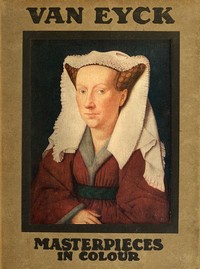
There’s something about watching those Nuremberg bronze founders let go of Gothic spires for softer, Roman lines—like a quiet shift in a long friendship. It reminded me of tracing light through the Van Eyck brothers’ panels, where every fold of cloth holds its own patience. The brothers Van Eyck — Inside the Classic feels like that same unhurried hand, working toward something gentler.
There are no reviews for this eBook.
There are no comments for this eBook.
Reader reflection
What was your reading experience?
Capture what you thought, learned, and would like to remember.
Your progress
0
/
10
2
How did the book work for you overall?
3
Would you pass this book on to a friend?
4
How demanding did the text feel?
5
Could you see yourself revisiting this book?
6
What did you think about the pace?
7
Could you follow the author’s main argument?
8
Was the book what you thought it would be?
9
What changed or sharpened your thinking?
10