1

Monumental Java — Key Ideas to Explore
(0 User reviews)
529
Project Gutenberg
2013
Not confirmed
Monuments -- Indonesia -- Java; Java (Indonesia) -- Antiquities; Indonesia -- Antiquities
Readers of public-domain and historical texts
Project Gutenberg digital edition
en
Edition facts
Words
82,285
Reading time
358 min
Text sections
16
For Monumental Java — Key Ideas to Explore, the stored edition analysis reports 82,285 words, 5 hr 58 min estimated reading time, and 16 detected text sections.
The text analysis averages about 32.7 words per sentence, while the detected sections provide another way to judge how the source is divided.
Project Gutenberg metadata also associates the work with “Monuments -- Indonesia -- Java,” connecting these edition facts with the source record’s subject description.
Source:
Project Gutenberg record #42405
An idiosyncratic 1912 study of Java's Hindu and Buddhist monuments, blending personal recollection with sharp commentary on Dutch colonial governance, Javanese wayang theatre, and the angular sculpture of chandi Panataran.
Editorial Edition Score
4.9/5
★★★★★
★★★★★
Calculated from edition completeness, EPUB availability, text structure and catalogue metadata. Not a user rating.
How this score is calculated
- Description quality20 pts
- Title & short description10 pts
- Source metadata20 pts
- Text length15 pts
- Chapters / structure15 pts
- EPUB file integrity20 pts
Total of 100 points, scaled to a 2.5-5.0 range. Editions with an empty description or a missing EPUB file are not scored.
Edition quality
Read the Text
nted, whose labours were directed by Dr. J. L. A. Brandes, their head and soul. After his regretted death in 1905, he was succeeded by Dr. N. J. Krom, who has no easy task in fanning the spark, struck by his predecessor from the hard flint of official _laisser-aller_ into a steady, bright flame of real, continuous solicitude for the country’s antiquities.
Antiquities, except when sold, do not bring money to the exchequer, and the Dutch Government’s most holy colonial traditions are diametrically opposed to expenses without promise of immediate pecuniary profit. If sympathies in matters alien to that prime purpose are miraculously aroused, such interest, revealing itself at the very best by fits and starts to serve ambitious schemes, soon flags and dies. Especially in Dutch East Indian enthusiasm for enterprises financially uncommendable, the adage holds good that _tout lasse, tout casse, tout passe_. The efforts of the Archaeological Commission can be traced only at the respectful distance of at least a couple of years, the drowsy dignity of red-tapeism putting as long a space as possible between the vulgar gaze of the unofficially curious and the official accounts of things accomplished, meetly compiled, arranged, amended, corrected, revised, purged, padded and bolstered up by the editing experts of successively the circumlocution offices at Batavia, Buitenzorg and the Hague. The reports, published in this manner, whatever they represent as having been done, lay no stress, of course, upon what has been left undone, upon the architectural marvels unprovided for, still suffered to crumble away, to be stripped and demolished, the valuable statuary and ornaments to be carried off piecemeal by unscrupulous collectors, the lower priced stones they left, sculptured or not, by the builders of private dwellings and factories, of Government bridges, dams and embankments.
The illustrations, inserted to explain, imperfect though it be, the charm of the temple ruins I treated of, are reproductions of photographs, taken for the Dutch East Indian Archaeological Service, I obtained from Messrs. Charls and van Es at Weltevreden, by courtesy of Dr. N. J. Krom, and of photographs taken for the Centrum Company at Batavia, and by Mr. C. Nieuwenhuis and the late Cephas Sr. at Jogjakarta. The work of restoration can be appreciated from the photo-prints of the _chandi_ Pawon and, with respect to the _chandis_ Mendoot and Boro Budoor, from those facing pp. 215 and 280; they are the numbers 24 and 40 on the list of the illustrations, and I owe them to Major T. van Erp, also through the intermediary of Dr. Krom. My indebtedness for the text so far as it does not rest on personal observation and information obtained in the localities referred to, is a very large one to many authors on many subjects separately specified in the notes. Concerning the historical parts, I beg leave to state that my readings on controversial points have been determined by a careful sifting of the most acceptable theories advanced, at the risk of critics of the stamp alluded to, proving my preferred records absolutely inadmissible. If so, I having pulled the long bow _à l’instar_ of the annalists and chroniclers of ancient Java, and consequently being shown up for indicating the way in which things did not happen and could not have happened, instead of sticking to the historical truth agreed upon until one of the hall-marked omniscient makes a name for himself by inducing the others to agree upon something else, my sin falls back on the shoulders of the _savants_ prone to lead their admirers astray by their occasional imitation of the eminent historian at whose inborn disrespect for facts Professor Freeman used to poke fun. I am afraid that the system of transliteration I adopted, will also meet with scant recognition in the same quarter, but finding none that, strictly carried through, adjusts itself equally well to the exigencies both of Javanese and Malay names and expressions, I shall adhere to this one until taught better.
This must suffice for a preface if, indeed, it does not exceed the measure allowed by my readers’ patience. Knowing Java, they will, however, excuse my fervour in introducing reminiscences of beauty breathing scenes which, once enjoyed, linger like delights in memory
... _the memory of a dream, Which now is sad because it hath been sweet_.
Not knowing Java yet, they will forgive later, when they have visited the matchless old shrines, images of her past and symbolic of her hopes for blessings hidden in the womb of time, when they have tried to read the riddle of her children’s destiny in the Boro Budoor
... _seated in an island strong, Abounding all with delices most rare._
J. F. Scheltema opens his 1912 study not with a measured survey of temples but with a defiant disclaimer: his book is no exhaustive treatise, no tourist vade-mecum, and certainly no contribution to Dutch East Indian statistics. Instead, he presents it as a personal diversion—a chance to relive sunny hours spent among Java's monuments during long northern winter evenings. This prefatory stance sets the tone for a work that is as much about the author's voice as about the stones he describes.
A Voice of Ironic Detachment
Scheltema's prose is marked by a cultivated, ironic detachment that distances him from both colonial officialdom and academic pedantry. He admits to writing for his own pleasure, hoping to displease critics of mutual admiration, and quotes Lucretius on the epigraph page. The preface bristles with self-deprecation: he is not guilty of an ambitious attempt to enrich the world, he denies any presumption to be a useful companion. Yet this modesty is a rhetorical pose, allowing him to critique Dutch bureaucratic ineptitude—long commissions with long names toiling over long reports—without appearing to write a polemic. The voice is that of a man who has seen enough of Java to hold strong opinions, but who prefers the oblique thrust to the direct assault.
From Stone to Shadow: The Wayang Connection
In discussing the bas-reliefs of chandi Panataran, Scheltema makes a precise observation: the angular, flat figures depart from the smooth treatment typical of Javanese sculpture, which he likens to Canova's 'peeled-radish' style. He then draws a connection to Javanese wayang theatre, noting that the correspondence between the temple's illustrations of literature and the national theatre has been insisted upon by Rouffaer. Scheltema proceeds to classify wayang forms—poorwa, gedog, kelitik, golek, topeng, wong, bèbèr—and traces the etymology of lakon, the Javanese word for drama, as the exact equivalent of the Greek-derived 'drama.' The wayang poorwa, he explains, derives from the parwas of the Mahabharata and serves as the Javanese people's source of historical notions, much as Shakespeare's histories did for another island's inhabitants before actor-managers mutilated them.
Pace and Digression: The Texture of Recollection
The narrative pace of Monumental Java is uneven, shifting between close description of monuments and expansive digressions into Javanese culture, colonial policy, and even European theatre. Scheltema's account of the wayang poorwa performance, for instance, lingers on the performer's lamp, the red-bordered cloth, the gavel of wood or horn, and the separation of male spectators behind the screen—details that slow the reader into the scene. Yet this digressive texture is deliberate: the book is structured as memory, not as a systematic guide. The author warns that he chooses from material stored in memory, reliving sunny spells between 1874 and 1903. The result is a work that resists linear reading, rewarding those who accept its meandering pace as part of its character.
Readers approaching Monumental Java should expect neither a comprehensive catalog of temples nor a neutral travelogue. Scheltema's voice is the true subject: learned, sardonic, and deeply personal. The book is best read as a period piece of colonial scholarship, one that reveals as much about the author's sensibilities as about the monuments he describes. Those interested in Javanese wayang or the reception of Hindu-Buddhist architecture in the early twentieth century will find particular value in its digressions.
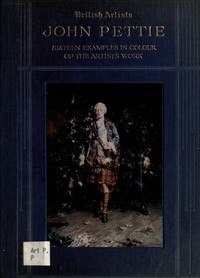
I keep thinking about that 1912 Java book—how its author cared more for the weight of stone than colonial rule. That quiet stubbornness reminded me of something else, a gentler thing: John Pettie, R.A., H.R.S.A. Sixteen examples in colour of the artist's work — Context and Discussion, where paint holds feeling the same way. Both linger, don't they, like a half-remembered face.
There are no reviews for this eBook.
There are no comments for this eBook.
Reader reflection
Record your reading impressions
A brief reflection can help important ideas stay with you longer.
Your progress
0
/
10
2
How much did you enjoy the reading experience?
3
Would you encourage someone else to read it?
4
How demanding did the text feel?
5
Would you read this book again?
6
How distinctive were its ideas or approach?
7
Which element worked best for you?
8
How would you describe its reading pace?
9
Which lesson or insight stayed with you?
10