1

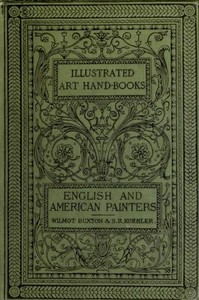
English Painters, with a Chapter on American Painters — Edition Insights
(0 User reviews)
756
Project Gutenberg
2012
Not confirmed
Painters -- England; Painters -- United States
Readers of public-domain and historical texts
Project Gutenberg digital edition
en
Edition facts
Words
57,538
Reading time
251 min
Text sections
8
This digital edition of English Painters, with a Chapter on American Painters — Edition Insights is described by source-level measurements including 57,538 words, 4 hr 11 min estimated reading time, and 8 detected text sections.
The text analysis averages about 19.7 words per sentence, while the detected sections provide another way to judge how the source is divided.
Project Gutenberg metadata also associates the work with “Painters -- England,” connecting these edition facts with the source record’s subject description.
Source:
Project Gutenberg record #39265
This editorial note examines the structure and tensions in a Victorian art handbook that pairs English painters with a chapter on American painters, noting how the text balances biographical anecdote, institutional history, and a defense of native art against classical norms.
Editorial Edition Score
4.7/5
★★★★★
★★★★★
Calculated from edition completeness, EPUB availability, text structure and catalogue metadata. Not a user rating.
How this score is calculated
- Description quality20 pts
- Title & short description10 pts
- Source metadata20 pts
- Text length15 pts
- Chapters / structure15 pts
- EPUB file integrity20 pts
Total of 100 points, scaled to a 2.5-5.0 range. Editions with an empty description or a missing EPUB file are not scored.
Edition quality
Read the Text
CHAPTER I. PAGE Early English Art 1
English Art in the Sixteenth and Seventeenth Centuries 9
English Art in the Eighteenth Century--William Hogarth 36
The Royal Academy and its influence 44
The Progress of English Art in the Eighteenth Century 60
Book Illustrators--Miniature Painters 85
Painters in Water Colours 100
English Art in the Nineteenth Century--Sir Thomas Lawrence and his contemporaries 116
Landscape Painters 127
Historic Painters 148
First, or Colonial Period 190
Second, or Revolutionary Period 195
Third Period, or Period of Inner Development 201
Fourth, or Present Period 217
LIST OF ILLUSTRATIONS.
1. THE VALLEY FARM _Constable_ _Frontispiece_ PAGE 2. AGE OF INNOCENCE _Reynolds_ xiv
3. FROM ST. ETHELWOLD'S BENEDICTIONAL _Godeman_ 3
4. ARTHUR, PRINCE OF WALES (_Miniature_) 7
5. HENRY, PRINCE OF WALES (_Miniature_) 10
6. NICOLAS KRATZER _Holbein_ 12
7. EDWARD, PRINCE OF WALES (_Miniature_) _Holbein_ 14
8. A DUTCH GENTLEMAN _More_ 18
9. COUNTESS OF PEMBROKE _Hilliard(?)_ 21
10. SIR PHILIP SIDNEY (_Miniature_) _Isaac Oliver_ 23
11. JAMES I. (_Miniature_) _Hoskins_ 24
12. COUNTESS OF DEVONSHIRE _Van Dyck_ 27
13. OLIVER CROMWELL _Lely_ 29
14. GRINLING GIBBONS _Kneller_ 33
15. WILLIAM HOGARTH AND HIS DOG TRUMP _Hogarth_ 39
16. MORNING _Wilson_ 49
17. MRS. BRADYLL _Reynolds_ 53
18. MRS. SIDDONS _Gainsborough_ 57
19. TITANIA AND BOTTOM _Fuseli_ 63
20. DEATH OF WOLFE _West_ 65
21. DEATH OF MAJOR PEIRSON _Copley_ 68
22. MERCURY INVENTING THE LYRE _Barry_ 70
23. MARQUIS OF STAFFORD _Romney_ 73
24. CHARITY _Northcote_ 77
25. THE WATERING-PLACE _Morland_ 82
26. FROM DANTE'S INFERNO _Blake_ 86
27. THE DREAM _Stothard_ 88
28. THE PORTRAIT _Smirke_ 90
29. THE WOODCOCK _Bewick_ 92
30. TAIL-PIECE _Bewick_ 93
31. MORNING WALK _Chalon_ 98
32. EVENING _Turner_ 106
33. THE TOMB OF THE SCALIGERS AT VERONA _Prout_ 109
34. BERNCASTLE, ON THE MOSELLE _Harding_ 111
35. THE VIEW FROM RICHMOND HILL _De Wint_ 113
36. OLD ENGLISH HOSPITALITY _Cattermole_ 115
37. MASTER LAMBTON _Lawrence_ 118
38. TRIAL OF QUEEN CATHERINE _Harlow_ 122
39. SWISS PEASANT GIRL _Howard_ 124
40. THE GRAND CANAL, VENICE _Turner_ 128
41. TRENT IN TYROL _Callcott_ 132
42. THE FISHERMAN'S DEPARTURE _Collins_ 134
43. ST. GOMER, BRUSSELS _Roberts_ 136
44. FRANCIS I. AND HIS SISTER _Bonington_ 138
45. BELSHAZZAR'S FEAST _Martin_ 140
46. TERMINATI MARINA _Stanfield_ 144
47. THE PLEASANT WAY HOME _Creswick_ 146
48. THE RAPE OF EUROPA _Hilton_ 149
49. THE DANGEROUS PLAYMATE _Etty_ 153
50. GREEK FUGITIVES _Eastlake_ 155
51. JOASH SHOOTING THE ARROWS OF DELIVERANCE _Dyce_ 157
52. HAROLD PRESENTS HIMSELF TO EDWARD THE CONFESSOR _Maclise_ 159
53. THE MAID OF SARAGOSSA _Wilkie_ 165
54. CHOOSING THE WEDDING GOWN _Mulready_ 168
55. SANCHO PANZA AND THE DUCHESS _Leslie_ 171
56. CAPTAIN MACHEATH _Newton_ 174
57. PEACE _Landseer_ 177
58. THE ARAB SCRIBE _Lewis_ 181
59. OUR VILLAGE _Walker_ 183
60. DEATH ON THE PALE HORSE _West_ 194
61. GENERAL KNOX _Stuart_ 196
62. DEATH OF MONTGOMERY IN THE ATTACK OF QUEBEC _Trumbull_ 198
63. JEREMIAH AND THE SCRIBE _Allston_ 203
64. A SURPRISE _Mount_ 210
65. DESOLATION _Cole_ 214
66. NOON BY THE SEA-SHORE--BEVERLY BEACH _Kensett_ 216
67. SUNSET ON THE HUDSON _Gifford_ 218
68. LAMBS ON THE MOUNTAIN-SIDE _Hunt_ 220
BY H. J. WILMOT-BUXTON.
The volume English Painters, with a Chapter on American Painters belongs to a series of illustrated handbooks intended to make art history accessible to a broad audience. Its opening pages reveal a tension between celebrating native achievement and acknowledging the lingering prestige of Continental models. The authors position English painting as a field that has long been undervalued, noting that painters were once regarded as “a better kind of house-decorators.” This defensive posture recurs throughout, as the text champions figures who struggled against neglect or challenged fashionable conventions.
Biography as Evidence of Character
The handbook leans heavily on biographical anecdote to establish an artist’s merit. The account of Thomas Lawrence is typical: his father kept an inn, the boy recited Milton and Collins for guests, and at five he drew a “remarkably truthful likeness” of Lady Kenyon. Such details serve not merely as color but as proof of innate talent and early recognition. The narrative emphasizes Lawrence’s rapid rise—elected an Associate of the Academy at twenty-two, Principal Painter-in-Ordinary to the King at twenty-three—as though speed of advancement itself validates artistic worth. This pattern recurs with other figures: precocious skill, patronage by the powerful, and institutional honors form a repeated arc. The text rarely lingers on technique or aesthetic theory; instead, it treats the artist’s life as a moral exemplar of perseverance and natural gift.
Institutions as Agents of Change
The handbook presents institutions—the Royal Academy, the Water-Colour Societies—as engines that elevated the social standing of painters. It observes that before the Academy, artists were seen as “a better kind of house-decorators,” implying that institutional recognition was necessary to transform craft into profession. The Water-Colour Societies are credited with promoting a branch of art that “starting from the topographer’s sketch, has attained high excellence and beauty.” This framing suggests a teleology: humble origins (topography, decorative work) give way to refined art through collective organization. Yet the text also notes tensions: the Academy improved status but also imposed standards; the societies fostered a medium that had been marginal. The institutional lens allows the authors to discuss art history as a story of professionalization rather than purely aesthetic evolution.
National Pride and Classical Anxiety
A persistent undercurrent is the need to justify English painting against the shadow of Italian and French schools. The authors praise West for making “a bold stand against the ridiculous fashion which represented any warrior, even a Red Indian, attired as a soldier of ancient Rome.” This critique of neoclassical convention is a bid for native authenticity. Similarly, the text celebrates painters who “treated history with freshness and truth” or who “showed the hitherto neglected beauties of our own land.” The handbook’s structure—a separate chapter on American painters appended to the English narrative—further underscores a desire to map a distinct Anglo-American tradition. Yet the very need to assert this independence reveals anxiety: the constant comparisons to Continental models imply that English art is still being measured against an external standard.
Readers approaching this handbook should attend to its dual purpose: it is both a reference work and a polemic for the value of English art. The biographical sketches reward attention for what they reveal about Victorian criteria of artistic success—speed of recognition, breadth of patronage, moral character. The institutional history, meanwhile, offers a lens on how art was professionalized in the nineteenth century. The appended chapter on American painters, though brief, signals an early attempt to frame a transatlantic narrative of art.
There’s something tender in how that old handbook tries to hold English and American painters side by side, each quietly defending its own light. It reminded me of the patience in an older craft, like sorting feathers and hooks for a pattern no one rushes. Blacker's art of fly making, &c. — Key Ideas to Explore carries that same unhurried devotion, a small art made whole by attention.
There are no reviews for this eBook.
There are no comments for this eBook.
Reader reflection
Your personal reading reflection
Build a private reading journal entry for this title.
Your progress
0
/
10
2
Was reading this book enjoyable?
3
Would you pass this book on to a friend?
4
What was the reading difficulty like?
5
What was the strongest part of the book?
6
How personally connected did you feel to the book?
7
Did you gain anything practical from the text?
8
How much did the book move you?
9
In one sentence, what did you learn?
10