1

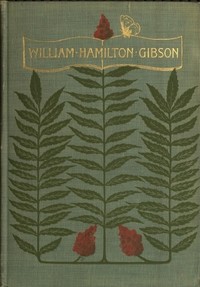
William Hamilton Gibson: artist—naturalist—author — Context and Discussion
(0 User reviews)
1369
Project Gutenberg
2017
Not confirmed
Gibson, W. Hamilton (William Hamilton), 1850-1896; Illustrators -- United States -- Biography
Readers of public-domain and historical texts
Project Gutenberg digital edition
en
Edition facts
Words
70,918
Reading time
309 min
Text sections
9
Before opening William Hamilton Gibson: artist—naturalist—author — Context and Discussion, the edition data offers a quick orientation: 70,918 words, 5 hr 9 min estimated reading time, and 9 detected text sections.
The text analysis averages about 21.0 words per sentence, while the detected sections provide another way to judge how the source is divided.
Project Gutenberg metadata also associates the work with “Gibson, W. Hamilton (William Hamilton), 1850-1896,” connecting these edition facts with the source record’s subject description.
Source:
Project Gutenberg record #55690
This biography traces William Hamilton Gibson's career as artist-naturalist-author, focusing on how his sketches and scientific lectures led to literary success. Adams examines Gibson's unique ability to merge art and nature study, his accidental path to writing, and his popular scientific demonstrations.
Editorial Edition Score
4.7/5
★★★★★
★★★★★
Calculated from edition completeness, EPUB availability, text structure and catalogue metadata. Not a user rating.
How this score is calculated
- Description quality20 pts
- Title & short description10 pts
- Source metadata20 pts
- Text length15 pts
- Chapters / structure15 pts
- EPUB file integrity20 pts
Total of 100 points, scaled to a 2.5-5.0 range. Editions with an empty description or a missing EPUB file are not scored.
Edition quality
Read the Text
n with his friend Beard. Other work followed, and he was a recognized contributor to the Harpers’ publications.
But the work which probably made his “calling and election sure” was his masterly illustration of an article written by Mrs. Helen S. Conant, entitled “Birds and Plumage.” Gibson had suggested the article, furnishing the idea and proposing as a title “The Plumage of Fashion.” He did not secure the commission to write the text: his abilities as a writer had not been demonstrated, and he himself was diffident about them. But he received the order for sixteen illustrations, into which we may well believe he threw his whole strength. The initial design attracted marked attention and drew out unstinted praise. It was a full-page picture of a peacock’s feather. It gave the article instant success. The press was enthusiastic in commending it. The August number of “Harper’s Magazine” for 1878 may be said to have marked a new epoch in American illustration; and young Gibson’s work led all the rest. The reserved and refrigerated criticism of the “Nation” was relaxed almost to the point of enthusiasm: “The remarkable series of birds drawn on the block by Mr. William H. Gibson is more obviously than the imitations just mentioned the result of the engraver’s skill and unwearied patience. The cut of the peacock feather, for instance, which introduces the paper on ‘Birds and Plumage,’ must impress even the uninitiated with its rare and costly character, whether regarded as a design or as an engraving. Mr. Gibson has evidently studied his subjects with great care and succeeded in portraying them, both in action and in repose, in a graceful and life-like manner, with instructive accessories.” The “Christian Union,” always careful and conservative, said: “Upon this article, which has been a long time in preparation, the publishers have, it is understood, laid out an unprecedentedly large sum of money. Certainly Mr. Gibson’s graceful pencil has given them the worth of it. No better work, it is safe to say, has ever appeared in the pages of the magazine.”
But best and most conclusive of all the words of praise which this drawing elicited, were those of Mr. Charles Eliot Norton, in a personal letter to the young artist:
“CAMBRIDGE, _Nov. 8, 1878_.
“DEAR SIR: I am much obliged to you for your note, for it gives me an opportunity which I have desired, to express to you my admiration of the skill and beauty of the design of the peacock’s feather, so excellently cut on wood by Mr. King. It is not merely subtle and refined execution which is shown in the piece, but a poetic feeling for the quality and charm of the feather itself and for its value in composition. Your feather ought to be as well known as Rembrandt’s shell or Hollar’s furs. For you and Mr. King in your joint work have succeeded in suggesting the splendor, the play, the concentration of color, the bewildering multiplicity of interlacing curves, the elastic spring and vitality of every fiber, and have given the immortality of art to one of the purely decorative productions of nature. I shall look for your new work with great interest.
“I am very desirous to see a proof of your feathers on soft India paper. If I can find some proper paper here I shall be tempted to send it to you. But paper suitable for such work is not easily found.”
All this was said of the youth who six years before had been pronounced without even the promise of ability! Surely he had a right to be proud of his triumph. He had fairly won his spurs. Henceforth there was no doubt of his standing as one of the first of American illustrators.
John Coleman Adams opens this biography by placing William Hamilton Gibson alongside Henry D. Thoreau and John Burroughs as one of three men who inspired a generation's love of nature. But where Thoreau was the philosopher and Burroughs the poet, Adams casts Gibson as the artist-naturalist—a man whose pencil could make nature luminous. The book traces Gibson's career from his boyhood through his swift success as an illustrator, lecturer, and author, emphasizing how his visual art and scientific observation were inseparable.
Adams draws heavily on Gibson's own account of how he drifted into authorship: a suggestion from editor Henry M. Alden led to the article "Snug Hamlet," then to a series of seasonal sketches, and finally to the book Pastoral Days. This origin story sets the tone for a biography that treats Gibson's writing as an accidental but natural extension of his drawing and lecturing.
A Trio of Nature-Interpreters
Adams begins with a bold claim: three men—Thoreau, Burroughs, and Gibson—did more than any others to inspire their generation with the love of nature. He distinguishes them by their methods: Thoreau challenged readers to live in a shanty and see the world; Burroughs acted as a personal guide to field and forest; Gibson brought nature directly to the eyes through his pencil. This framing is not merely introductory; it establishes the lens through which Adams will view Gibson's entire career. The biography repeatedly returns to the idea that Gibson's power lay in making nature visible, whether through illustrations that "made luminous" his pages or through lectures that revealed "the most subtle operations of the plant and insect world." Adams does not simply list achievements; he positions Gibson within a lineage of American nature writing, emphasizing the visual over the literary.
The Accidental Author
Gibson himself claimed he never intended to become a writer. According to Adams, Gibson described his literary work as something he drifted into out of necessity: his sketchbook was full of drawings that would not sell alone, so he wrote text to accompany them. The turning point came when Harper's editor Henry M. Alden asked him to write up anecdotes from his school days. The resulting article, "Snug Hamlet," surprised Gibson with its favorable reception. Alden then suggested a winter companion piece, and soon Gibson had written four seasonal sketches that became the book Pastoral Days. Adams presents this as a pattern: Gibson's writing always served his art, never the reverse. The biography quotes Gibson's own words at length, giving readers direct access to his voice. This section is valuable for understanding how Gibson viewed his own multi-faceted career—not as a planned progression but as a series of practical responses to opportunity.
Lecturing as Scientific Demonstration
Adams devotes considerable attention to Gibson's career as a lecturer, which he describes as a natural extension of his art and observation. Gibson's lectures were not mere talks; they were performances that used a "mechanism which works to a charm" to reveal the hidden operations of plants and insects. The response was immediate and broad: farmers, city club members, schoolchildren, and society women all attended. Adams compares Gibson's success to that of Louis Agassiz, claiming that no one since Agassiz had cultivated the field of popular scientific demonstration with such success. This comparison is striking because it elevates Gibson from illustrator to educator. The biography suggests that Gibson's true gift was not just seeing nature but making others see it—whether through a drawing, a book, or a lecture hall demonstration. Adams implies that Gibson's early death cut short a career that might have won international renown in this field.
Structure and Movement Between Scenes
The biography's structure mirrors Gibson's own career trajectory: it moves from boyhood to artistic training to success, but it also shifts between different modes of work—illustration, writing, lecturing. Adams frequently pauses to describe Gibson's studios and work spaces, such as the "Writing Desk Brooklyn Studio" mentioned in a chapter heading. These settings anchor the narrative in physical places, giving readers a sense of Gibson's environment. The movement between scenes is not always chronological; Adams sometimes loops back to discuss a particular aspect of Gibson's method, such as how he combined sketches with text. This structure reflects the biography's dual focus: it is both a life story and an analysis of Gibson's creative process. Readers interested in how an artist-naturalist organized his work will find the book's arrangement as instructive as its content.
Adams's biography is best approached as a portrait of a man who saw nature through an artist's eyes and communicated it through multiple media. The book does not attempt to cover every detail of Gibson's life; instead, it selects episodes that illustrate his method and character. Readers who want to understand how Gibson's illustrations and lectures worked together will find the most value here. The biography's strength lies in its use of Gibson's own words and its clear focus on his unique combination of talents.
Reading about Gibson’s patient pencil strokes—how he let the flowers teach him their own geometry—I found myself thinking of a different kind of shelter, one built from the same quiet attentiveness. There is a plainness to that craft, a gentle trust in hands. It reminded me of Shelters, Shacks and Shanties — A Reader’s Guide, where the same unhurried wonder leans into wood and stone.
There are no reviews for this eBook.
There are no comments for this eBook.
Reader reflection
Record your reading impressions
A brief reflection can help important ideas stay with you longer.
Your progress
0
/
10
2
What was your overall reaction to the book?
3
How likely are you to recommend this book?
4
How much effort did this book require?
5
Did the story or argument move comfortably?
6
Did it raise ideas you would like to talk about?
7
How strongly did the book affect you emotionally?
8
Did the book offer a fresh perspective?
9
What is the main idea you are taking away?
10