1

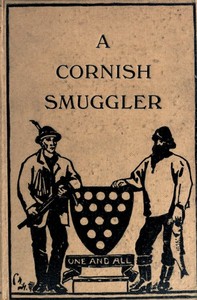
The Autobiography of a Cornish Smuggler (Captain Harry Carter, of Prussia Cove) 1749-1809 — Background and Themes
(0 User reviews)
561
Project Gutenberg
2012
Not confirmed
Smuggling -- Great Britain -- History; Carter, Harry, 1749-1829
Readers of public-domain and historical texts
Project Gutenberg digital edition
en
Edition facts
Words
36,611
Reading time
160 min
Text sections
4
The source record for The Autobiography of a Cornish Smuggler (Captain Harry Carter, of Prussia Cove) 1749-1809 — Background and Themes measures this digital text at 36,611 words, 2 hr 40 min estimated reading time, and 4 detected text sections.
The text analysis averages about 23.5 words per sentence, while the detected sections provide another way to judge how the source is divided.
Project Gutenberg metadata also associates the work with “Smuggling -- Great Britain -- History,” connecting these edition facts with the source record’s subject description.
Source:
Project Gutenberg record #40008
Harry Carter's firsthand account of smuggling in late-1700s Cornwall, written in his own dialect, reveals the practical risks, moral tensions, and daily realities of a trade that shaped the region's coast and communities.
Editorial Edition Score
4.6/5
★★★★★
★★★★★
Calculated from edition completeness, EPUB availability, text structure and catalogue metadata. Not a user rating.
How this score is calculated
- Description quality20 pts
- Title & short description10 pts
- Source metadata20 pts
- Text length15 pts
- Chapters / structure15 pts
- EPUB file integrity20 pts
Total of 100 points, scaled to a 2.5-5.0 range. Editions with an empty description or a missing EPUB file are not scored.
Edition quality
Read the Text
England did the teaching and influence of John Wesley obtain such a hold as in Cornwall. At the time of his first visit he speaks of the natives of this distant country as "those who neither feared God nor regarded man" ("Diary," May 17, 1743); he accuses them of wrecking and of murdering those who were washed ashore, and describes their pastimes as "hurling, at which limbs were often broken, fighting, drinking, and all other manner of wickedness." The "Lanisley Letters" contain similar charges of wrecking and murder, and Dr. Borlase confirms the statement as to their drunken habits. In 1750 Wesley mentions how greatly all these things were changed. They were, perhaps, not as much changed as he thought, but undoubtedly they were greatly improved, for it is plain fact that the whole of the moral reformation of the Cornish folk is due to him. He gained followers so rapidly in the west that at the first Methodist Conference in 1744, St. Ives is classed with London, Bristol, and Newcastle; "from this it is evident," says Dr. Smith ("Hist. of Methodism," i. 213), "that London, Bristol, St. Ives, and Newcastle were regarded as the great centres of Methodism in England at this period." At the third Conference (1746) Cornwall forms one district out of seven, while the others included in some cases four and in one case six English counties. In 1750 John Wesley ("Diary," August 18) says of St. Just, "There is still the largest society in Cornwall, and so great a proportion of believers I have not found in all the nation beside." Similar societies or classes sprang up in the most remote places, such as Rugan, or Rudgeon as it is more usually spelt now, where the society met at which Charles Carter was converted; at Trevean and Caerlean, where Harry Carter preached.
That especial characteristic of Wesley's organisation, "the local preacher," took root firmly in Cornwall from the very first. To those who are not acquainted with the county it may be necessary to explain that these laymen, earnest men of all classes, who preach, are so common in every village that they constitute a distinguishing feature in the local life. The services in the small wayside chapels which are so numerous are usually conducted by a local preacher in the intervals between the visits of the regular ministers. Those who do know Cornwall also know the importance of the local preacher in the history of the Methodist movement. John Wesley's preaching was received by the poor and uneducated, the miner, the fisherman, and the labourer, and the persecution of the clergy and the magistrates only strengthened the enthusiasm of the people for their great teacher. From such men sprang the first local preachers; preaching and exhorting not with the dull formality of men who had to do it, but with the earnestness of men who really felt that they had a message to deliver, and labouring under uncontrollable excitement they greatly impressed their hearers: while the familiarity of their persons led their audience to look upon this new teaching as a thing of their own to which they could all attain. It is impossible to doubt that the hold which the movement gained was greatly due to these men, and Harry Carter was one of them. John Wesley had set himself from the first against the smuggling which he found so prevalent; he had preached against it at several places, and had even published a pamphlet against it. We may therefore fairly suppose that Harry Carter, the great smuggler, was regarded as a most important accession to the ranks of his followers.
Harry Carter's autobiography, dictated in his old age and preserved in manuscript by his nephew, opens with a striking blend of religious reflection and practical seamanship. The opening pages immediately establish a voice that is both devout and worldly—Carter describes his conversion to Methodism alongside detailed accounts of navigating the Cornish coast. The editor, John B. Cornish, notes that the original manuscript contains inconsistencies in spelling and capitalization, reflecting Carter's own dialect and education. This is not a polished memoir but a raw, personal record, and the reader is advised to attend to the specific phrasing and rhythms of Carter's speech, which carry the texture of his experience.
A Voice from the Manuscript
The autobiography's most immediate feature is Carter's distinctive language. He writes in a Cornish dialect that the editor has preserved, with only minimal regularization. Phrases such as "I thought it was time to take a little courage" and "he begun to bale out" reveal a man who speaks as he lived—directly and without artifice. The text includes blank spaces marked by "[...]" where the original manuscript had missing words, reminding the reader that this is a transcription of a physical document. Carter's spelling is inconsistent: "sume" for "some," "evning" for "evening," "aboute" for "about." These are not errors but markers of authenticity. The reader should listen for the cadence of Carter's voice, which shifts between pious reflection and blunt narration of conflict, as when he describes a captain who "pretended to keep a reckning" but would not show his journal.
The Geography of Risk
The editor's introduction provides a detailed description of the coastline between Marazion and Helston, distinguishing the sheltered western part of Mounts Bay from the "steep and rocky cliffs" to the east of Cuddan Point. This geography is not mere background; it is the stage for Carter's trade. The eastern beaches, Pra Sand and the Looe Bar, are described as places where "landing impossible except on a few rare summer days." Carter's own narrative confirms this: he expects to be landed in Mounts Bay or "a little to the East of the Lizard," and when the captain reneges, a confrontation ensues. The reader should note how the physical landscape—the coves, the cliffs, the prevailing Atlantic swells—shapes every decision Carter makes. The autobiography is as much a record of navigation and weather as of smuggling.
Authority and Defiance at Sea
A central episode in the excerpts shows Carter challenging a captain who has broken his word. The captain, a professed religious man, is described as "more afraid of his life" during a storm, while Carter insists on keeping the pump. The power dynamic is complex: Carter is a steward and cabin boy, yet he dares to leave the helm and go below, saying "Keep her so your self, if you please." The captain's response—accusing Carter of having "the spirit of the devil"—reveals the moral and social tensions aboard ship. Carter's friend Dawson is present but "dare not speak one word." This incident illustrates how Carter navigates not only the sea but also hierarchies of class and piety. The reader should observe how Carter frames his defiance as a matter of principle, not mere insubordination.
The Captain's Confession
After the confrontation, the captain takes Carter aside and reveals a secret: he had stolen a brig loaded with hats from London, sold it in the West Indies, and bought the current vessel. This confession, delivered "out of the sight and hearing of any person," explains why he cannot land Carter as promised—he is a fugitive. The episode is remarkable for its candor and for the way it shifts the reader's understanding of the captain. He is not merely a harsh employer but a man with his own dangerous history. Carter's narrative does not moralize; it simply reports the facts. The reader is left to weigh the captain's professed religion against his actions. This moment exemplifies how the autobiography offers glimpses of a wider criminal world, without ever claiming to be a comprehensive history.
Readers approaching this autobiography should treat it as a spoken document, not a literary memoir. Carter's inconsistencies and omissions are part of its value. The editor's notes and the physical condition of the manuscript—with its missing words and dialect spellings—are essential context. Pay attention to what Carter chooses to record: the practical details of wind and tide, the moral calculations of a smuggler who also professes faith, and the moments of quiet defiance. The book rewards a slow reading, one that listens for the voice of a man who lived at the edge of the law and the edge of the land.
That rainy afternoon, Harry Carter’s dialect felt like a voice in the next room, his cautious evasions speaking of a life where every ledger hid a storm. Later, idle, I picked up a biography of Gladstone, and found the same quiet arithmetic—weighing conscience against necessity, balancing public grace with private compromise. Different shores, same tide. William Ewart Gladstone — Themes and Context lingers like Carter’s own sea-fog.
There are no reviews for this eBook.
There are no comments for this eBook.
Reader reflection
Before you leave, reflect on the book
Use these questions to collect your thoughts before moving on.
Your progress
0
/
10
2
How much did you enjoy the reading experience?
3
Would you encourage someone else to read it?
4
How demanding did the text feel?
5
Which aspect of the book did you value most?
6
Did any part of the book stay with you emotionally?
7
Did the book meet your expectations?
8
Is this a title worth rereading?
9
What is the main idea you are taking away?
10