
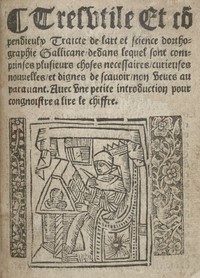
Tres utile et compendieulx Traicte de l'art et science d'orthographie gallicane…
Let's be clear: this isn't a novel. There's no hero's journey. Tres utile et compendieulx Traicte de l'art et science d'orthographie gallicane is exactly what it says on the tin—a useful and compact treatise on the art and science of French spelling. Published in the 1530s, it's a practical guide. The author lays out rules, argues for consistency, and tries to tame the wild, unpredictable way French was written at the time. Think of it as a very, very early version of Strunk & White's Elements of Style, but for Renaissance French.
The Story
The 'story' here is the mission. France in the 1500s was a linguistic free-for-all. The same word could be spelled five different ways in the same document. This unknown author saw that chaos and decided to fix it. Page by page, they make a case for standardization. They explain why having rules matters for clarity, for printing, and for the language itself. The plot is the slow, meticulous building of a system where there was none. The climax isn't a battle; it's a perfectly reasoned grammatical principle. The mystery—the enduring hook—is that the person who cared so deeply about putting their name on the language forgot to put their own name on the book.
Why You Should Read It
You read this for the ghost in the machine. Once you get past the antique typesetting, you feel a real human presence. This wasn't a dry government commission; it reads like a personal crusade. You can feel the author's frustration with the mess and their genuine hope that their work will help. It's a profound act of optimism: creating order for a future they'll never see. In our age of autocorrect and universal grammar checkers, it's humbling to meet the mind that argued for the very idea of 'correct' spelling. It makes you appreciate the invisible architecture of the language you use every day.
Final Verdict
This is not for everyone. If you need a fast-paced narrative, look elsewhere. But if you're the kind of person who loves word origins, gets curious about how things become 'standard,' or finds beauty in systematic thinking, this is a hidden gem. It's perfect for history buffs with a soft spot for language, fans of obscure primary sources, and anyone who's ever wondered about the anonymous people who built the world's unnoticed foundations. It's a quiet, fascinating conversation with a ghost who wanted to make writing easier for all of us.
Legal analysis indicates this work is in the public domain. Enjoy reading and sharing without restrictions.
Melissa Davis
1 year agoI didn't expect much, but the flow of the text seems very fluid. Truly inspiring.

Donna Hill
1 year agoThe formatting on this digital edition is flawless.