
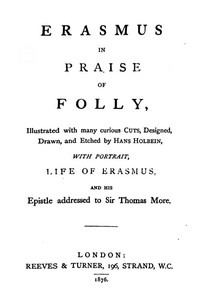
In Praise of Folly by Desiderius Erasmus
Okay, so the "plot" is simple: Lady Folly, the goddess of foolishness, steps up to give a speech praising herself. She’s dressed in academic robes, which is the first joke. Over the course of her lecture, she argues that she, not wisdom or reason, is the true engine of human happiness. She takes us on a tour of human life, from the cradle to the grave, showing how foolishness makes everything work.
The Story
Folly starts with the basics. Babies are happy because they’re clueless. Old people become childish again and find peace. Friendship and love? All built on overlooking each other’s flaws—a kind of blessed blindness she provides. Then she gets political. Kings maintain power through flattery and spectacle. Soldiers charge into battle fueled by glory, a totally foolish idea. Even marriage, she winks, relies on a certain agreeable ignorance.
The second half of her speech gets spicy. She turns her eye to the professional classes: lawyers, scientists, philosophers, and especially theologians and churchmen. Here, Erasmus (through Folly) drops the playful tone a bit. He critiques scholars who argue over useless details, monks obsessed with rituals, and church leaders living in luxury while ignoring the simple teachings of Christ. The punchline? The truest form of Christian faith, Folly claims, looks like holy foolishness to the wise world—a simplicity and love that rejects cold, proud logic.
Why You Should Read It
What blew my mind is how funny and current this feels. Erasmus isn’t just making fun of 16th-century people; he’s pointing out timeless human quirks. We still build our lives on hope, which is often irrational. We still follow leaders based on pageantry. We still get lost in our own expertise and miss the big picture. Reading it, you’ll nod and think, "Yep, we haven’t changed much."
It’s also a masterclass in satire. Erasmus walks a razor’s edge. He’s critical enough to make you think, but he includes himself and everyone in the joke. The tone isn’t bitter; it’s almost affectionate. He’s saying foolishness isn’t just for idiots—it’s part of being human, and maybe that’s okay. The most profound wisdom might just look like folly.
Final Verdict
This is the perfect book for anyone who loves smart humor and doesn’t mind a classic. It’s for the person who enjoys shows or books that mock society with a wink. History buffs will geek out over the specific church critiques that helped spark the Reformation. But really, it’s for any thoughtful reader who needs a reminder not to take themselves—or the world—too seriously. Just find a modern translation (the old English ones are tough), and let Lady Folly take the stage. You’ll be surprised how much you see yourself in her mirror.
This is a copyright-free edition. You can copy, modify, and distribute it freely.
David Perez
6 months agoGreat value and very well written.
Mary Moore
1 year agoVery helpful, thanks.
Elijah Miller
1 year agoAfter hearing about this author multiple times, the author's voice is distinct and makes complex topics easy to digest. This story will stay with me.
Elijah Hill
6 months agoCitation worthy content.




John Jackson
8 months agoThe digital formatting makes it very easy to navigate.