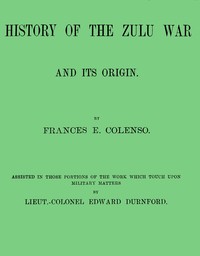
History of the Zulu war and its origin by Frances E. Colenso
Okay, truth bomb: I picked up Frances E. Colenso’s “History of the Zulu War and Its Origin” because I figured it would be some dry, dusty military account. Instead, I found a gripping, judgment-filled story that reads like a true-crime investigation—except the victim is a whole kingdom.
The Story
So here’s the deal: in the late 1870s, the British Empire in southern Africa wanted to expand, but the Zulu Kingdom—led by King Cetshwayo—was a big, independent, well-trained obstacle. The British sent demands (like “break up your army” and “let missionaries roam freely”) that Cetshwayo couldn’t accept without destroying his culture. Pretty soon, both sides were stuck in a corner. Colenso walks us through the diplomatic breakdown, one email-too-far at a time. Then comes January 22, 1879, and the Zulus crush a British force at Isandlwana—one of the worst colonial defeats ever. The war went on for months, ending in Zulu defeat and total humiliation. But Colenso doesn’t treat this like a play-by-play. She pauses to zoom in on the people: the stubborn British commanders, the frantic messengers, and Cetshwayo trying every possible trick to avoid war he knew would bleed his people dry.
Why You Should Read It
This book really stuck with me because Colenso writes like she’s furious about the injustice. She’s not hiding it—she absolutely believes the British started the war on flimsy excuses. And you can feel her passion in every line: she quotes letters, hints at conniving backroom deals, and shows how a little humility and a few more conversations might have saved thousands of lives. You know what also blew my mind? The Zulus were treated like a backward tribe, but they actually had a sophisticated military system and a brave, smart leader. Colenso gives fair airtime to everyone. I found myself rooting for Cetshwayo even though history already told me how this ends. That’s powerful writing.
Final Verdict
If you’re hoping for a chest-puffing victory lap about British soldiers heroically fighting “savages,” look elsewhere. Colenso flip the script entirely. This is a book for anyone who loves the messy truth of history—the mistakes, the arrogance, the casualties that could have been avoided. It’s sharp, it’s emotional, and it hands you a magnifying glass to examine how colonialism actually worked (spoiler: usually not fair). Perfect for readers who want their history with a heavy dose of humanity and a critical eye on who gets to tell the story.
This work has been identified as being free of known copyright restrictions. Preserving history for future generations.