
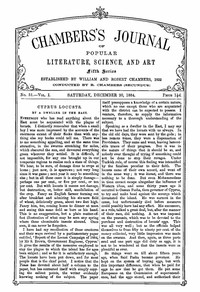
Chambers's Journal of Popular Literature, Science, and Art, Fifth Series, No.…
Let's be clear from the start: this isn't a novel. Chambers's Journal is a monthly magazine from the late 19th century, packed with everything its editors thought an educated, curious person might want to read. Picking it up is like tuning into a radio station from 1883.
The Story
There isn't one plot. Instead, you get a wonderful mix. A typical issue might kick off with a serialized fiction story—maybe a mystery set in London or an adventure in the colonies. Then, you'll find a serious essay on a scientific discovery, like the newfangled telephone. There are travelogues from distant lands, practical advice on gardening or health, witty observations on social manners, and always a few poems. It's a buffet of ideas, meant to inform and entertain in equal measure. You're seeing what stories captured imaginations and what facts people were digesting with their afternoon tea.
Why You Should Read It
This is where the magic happens. Reading the Journal is a deeply human experience. You see their anxieties (articles on 'urban decay'), their wonder ('the marvels of the deep sea'), and their humor. The fiction reveals popular tropes and morals of the time. The science articles show a world on the cusp of modernity, trying to make sense of it all. It's completely unpretentious. This wasn't for academics; it was for everyday folks. That's what makes it so special. You're not reading history filtered through a modern textbook; you're getting it raw, from the source.
Final Verdict
Perfect for history lovers who want to go beyond dates and battles, for writers seeking inspiration from vintage storytelling, and for anyone with a strong sense of curiosity. If you enjoy podcasts like '99% Invisible' or the feeling of browsing a really eclectic museum, you'll love this. It's not a page-turner in the traditional sense, but it's a captivating slow burn. Dip in for fifteen minutes and travel 140 years back in time. Just be prepared—some views are very much of their era, which is itself a fascinating part of the lesson.
This text is dedicated to the public domain. Feel free to use it for personal or commercial purposes.



Amanda Anderson
6 months agoNot bad at all.