
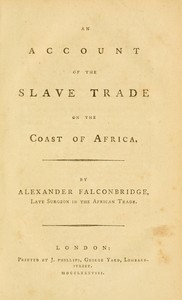
An account of the slave trade on the coast of Africa by Alexander Falconbridge
This isn't a story with a plot in the traditional sense. It's a direct report, a witness statement. Alexander Falconbridge lays out, in clear and methodical detail, exactly how the British slave trade operated on the West African coast in the late 18th century. He describes the forts, the negotiations with local leaders, and the process of acquiring captives. Then, he focuses intensely on the ships—the 'tight packing' of human beings, the diseases, the punishments, and the sheer, calculated cruelty of the voyage across the Atlantic. He doesn't shy away from his own role, explaining the medical justifications used and the grim reality of his work. The book builds as a catalog of horrors, but it's framed by Falconbridge's own transformation from a participant to a horrified whistleblower.
Why You Should Read It
You should read this because it removes the filter. Most of what we know about the slave trade comes from statistics, laws, or later historical analysis. This is different. This is a man who was in the room, trying to stitch people up in the hold of a ship. His descriptions are so specific—the smell, the sounds, the way captives were chained—that it creates a visceral understanding no textbook ever could. What hit me hardest was his tone. It's not overly emotional; it's factual and precise, which makes the brutality he describes even more staggering. You can feel his disgust and shame seeping through the pages, turning his clinical account into a powerful moral indictment.
Final Verdict
This book is for readers who are ready to engage with difficult history at its source. It's perfect for anyone interested in the realities of the 18th century, the history of human rights, or the power of first-person testimony. It's not for the faint of heart—the descriptions are graphic and heartbreaking. But if you believe that understanding the true cost of history is important, Falconbridge's account is a necessary, unforgettable document. It's the kind of book that stays with you, changing how you see the world long after you've turned the last page.
This text is dedicated to the public domain. It is now common property for all to enjoy.
David Thomas
3 months agoA brilliant read that I finished in one sitting.
James Johnson
8 months agoAs a professional in this niche, the nuanced approach to the central theme was better than I expected. An excellent example of how quality digital books should be formatted.
Kimberly Anderson
1 year agoMy first impression was quite positive because the case studies and practical examples provided add immense value. I'm genuinely impressed by the quality of this digital edition.
Nancy Smith
2 years agoGiven the current trends in this field, the language used is precise without being overly academic or confusing. I am looking forward to the author's next publication.




Margaret Williams
1 month agoI decided to give this a try based on a colleague's recommendation, the practical checklists included are a great touch for real-world use. Truly a masterpiece of digital educational material.